
US Seizes Russian-Flagged Tanker as Trump Widens Oil Push

WASHINGTON — The United States captured two oil tankers on Wednesday that it was targeting to block oil from reaching Venezuela, in what is expected to be the president’s latest show of force against America’s foreign adversaries — doubling down not only on his “maximum pressure” campaign against Venezuela but also his … […]
The seizures came after a dramatic weekend of U.S. military operations in which Venezuelan President Nicolas Maduro was captured in Caracas.
Since then, Washington has intensified enforcement against vessels accused of violating sanctions on Venezuelan oil exports.
U.S. officials said the White House also plans to roll back portions of the oil sanctions imposed on Venezuela during Trump’s first term, signaling a strategy that blends pressure with selective economic opening.
A weeks-long chase across the Atlantic came to a halt early Wednesday when the United States Coast Guard and military special forces boarded the Marinera, a crude oil tanker flying Russia’s flag. The vessel had earlier denied boarding and re-registered, officials said in what they said was a bid to dodge sanctions.
Russian naval assets were said to be well in nearby and fears of a confrontation leaked around the operation. Moscow, which has reproached the U.S. over its policy on Venezuela and whose own diplomatic relations with Washington remain at
odds with the West over Ukraine, did not immediately respond to requests for comment.
U.S. Vice President JD Vance said the tanker had falsely claimed Russian status to avoid enforcement. “They tried to disguise themselves as a Russian oil tanker,” he said in a television interview. “It didn’t work.”
Earlier the same day, the Coast Guard also intercepted another vessel, the M Sophia, carrying Venezuelan oil near the northeastern coast of South America. The Panama-flagged tanker was fully loaded, according to shipping records linked to Venezuela’s state oil company, PDVSA.
U.S. officials said both ships were part of what they described as a growing “shadow fleet” used to move sanctioned oil from Venezuela and Iran through indirect routes.
“The only maritime energy transport allowed will be that which complies with American law and national security,” said Stephen Miller, deputy White House chief of staff.
Attorney General Pam Bondi said crew members aboard the Marinera made repeated efforts to avoid apprehension and failed to comply with Coast Guard orders. Criminal charges are expected, she said.
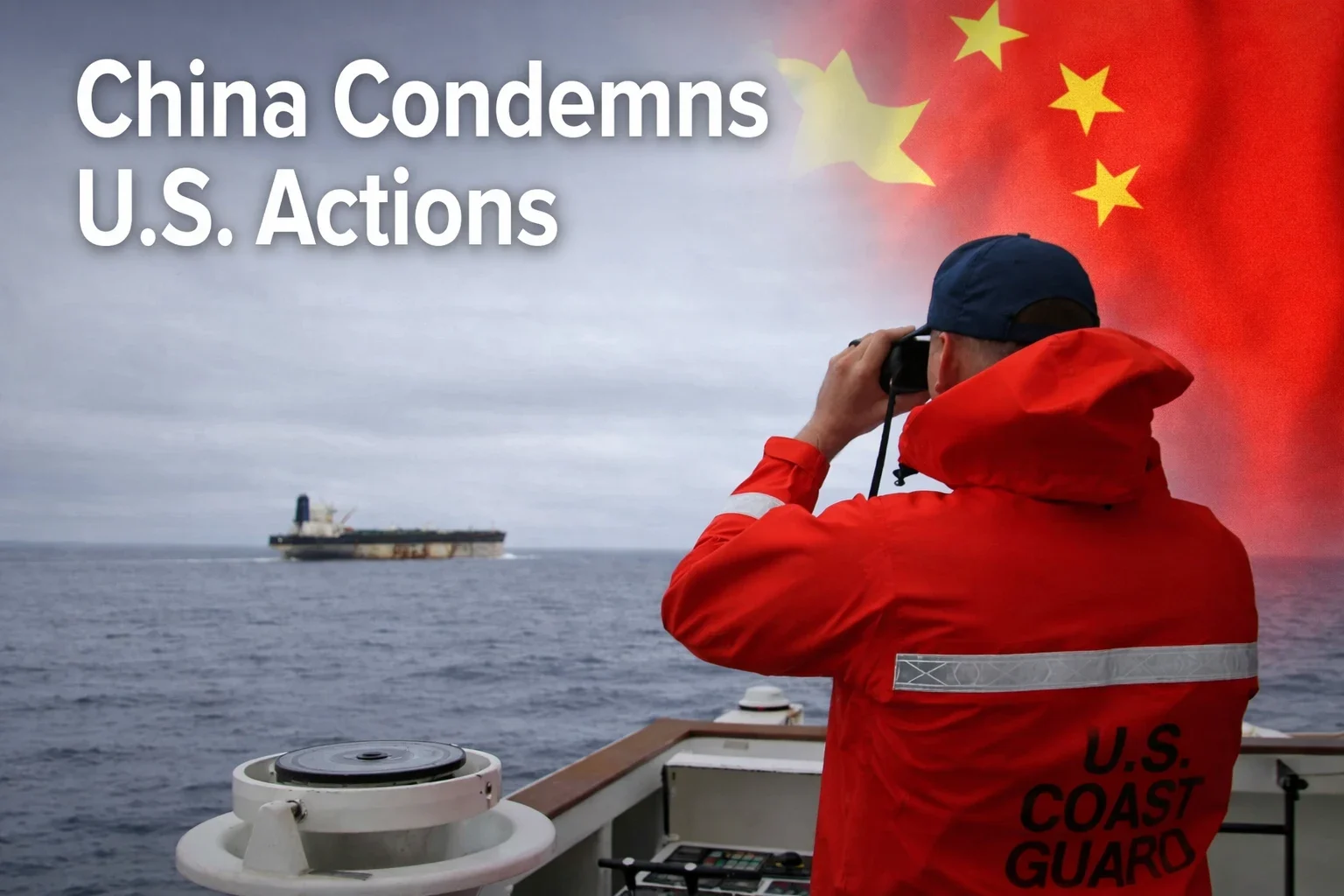
China Condemns U.S. Actions
China, Venezuela’s largest oil buyer, criticized the seizures sharply. A spokesperson for China’s Foreign Ministry described the U.S. actions as “bullying” and accused Washington of using force to dictate how Venezuela manages its own resources.
The Trump administration has been pressing Venezuela to redirect oil supplies originally intended for China and is seeking access to billions of dollars’ worth of crude. Trump has openly spoken about bringing Venezuela’s vast oil reserves under U.S. influence, working alongside American energy companies.
Venezuelan officials said more than 100 people were killed during the U.S. raid that led to Maduro’s arrest. Maduro appeared in federal court in New York this week and pleaded not guilty to drug trafficking charges.
Despite the arrest, Maduro’s allies remain in power, with Acting President Delcy Rodríguez signaling cautious openness to energy talks with Washington under continued pressure.
PDVSA confirmed it is in negotiations with U.S. officials, saying discussions are focused on legal, transparent commercial arrangements. Still, major U.S. oil companies remain hesitant, citing uncertainty over the administration’s aggressive foreign policy approach.
Oil prices slipped on global markets amid expectations that increased Venezuelan supply could soon reach buyers.
Washington’s allies have privately expressed unease over the precedent set by seizing a foreign head of state, even as Trump warned that further actions could follow elsewhere.
FAQ’s
Q1. Why did the U.S. seize a Russian-flagged oil tanker?
U.S. officials said the tanker was part of a “shadow fleet” used to transport sanctioned Venezuelan oil. The seizure was carried out under a judicial warrant as part of broader sanctions enforcement.
Q2. How is Venezuela connected to the seized tanker?
Authorities say the tanker was linked to Venezuela’s state oil operations and was being used to move crude in violation of U.S. sanctions, despite sailing under a Russian flag.
Q3. Does the seizure increase tensions with Russia?
Yes. The operation occurred with Russian vessels nearby, raising concerns about escalation at a time when relations are already strained over the war in Ukraine and energy sanctions.
Q4. What does this mean for Trump’s oil and sanctions policy?
The seizure signals a more aggressive approach by the Trump administration to control oil flows in the Americas, tighten sanctions enforcement, and pressure Venezuela’s government economically.
🔗 For more US political, Global and energy-related news: (Click Here)


